
 A missed signature can create a real compliance problem. If your organization is sending a demand letter, legal notice, account communication, or other time-sensitive document, knowing what is USPS Certified Mail Restricted Delivery helps you decide whether standard proof of mailing is enough or whether access to the mailpiece needs to be tightly controlled.
USPS Certified Mail Restricted Delivery is an extra USPS service that limits who can receive and sign for a mailpiece. It is commonly used when the sender wants delivery only to the addressee, or to an authorized agent in limited circumstances, rather than to just any adult at the address. When paired with Certified Mail, it adds a stronger layer of delivery control for documents where recipient identity matters.
What USPS Certified Mail Restricted Delivery Actually Does
Certified Mail by itself gives the sender proof of mailing and a record of delivery or delivery attempt. That is often enough for many business notices. Restricted Delivery changes the delivery standard by narrowing who may accept the item.
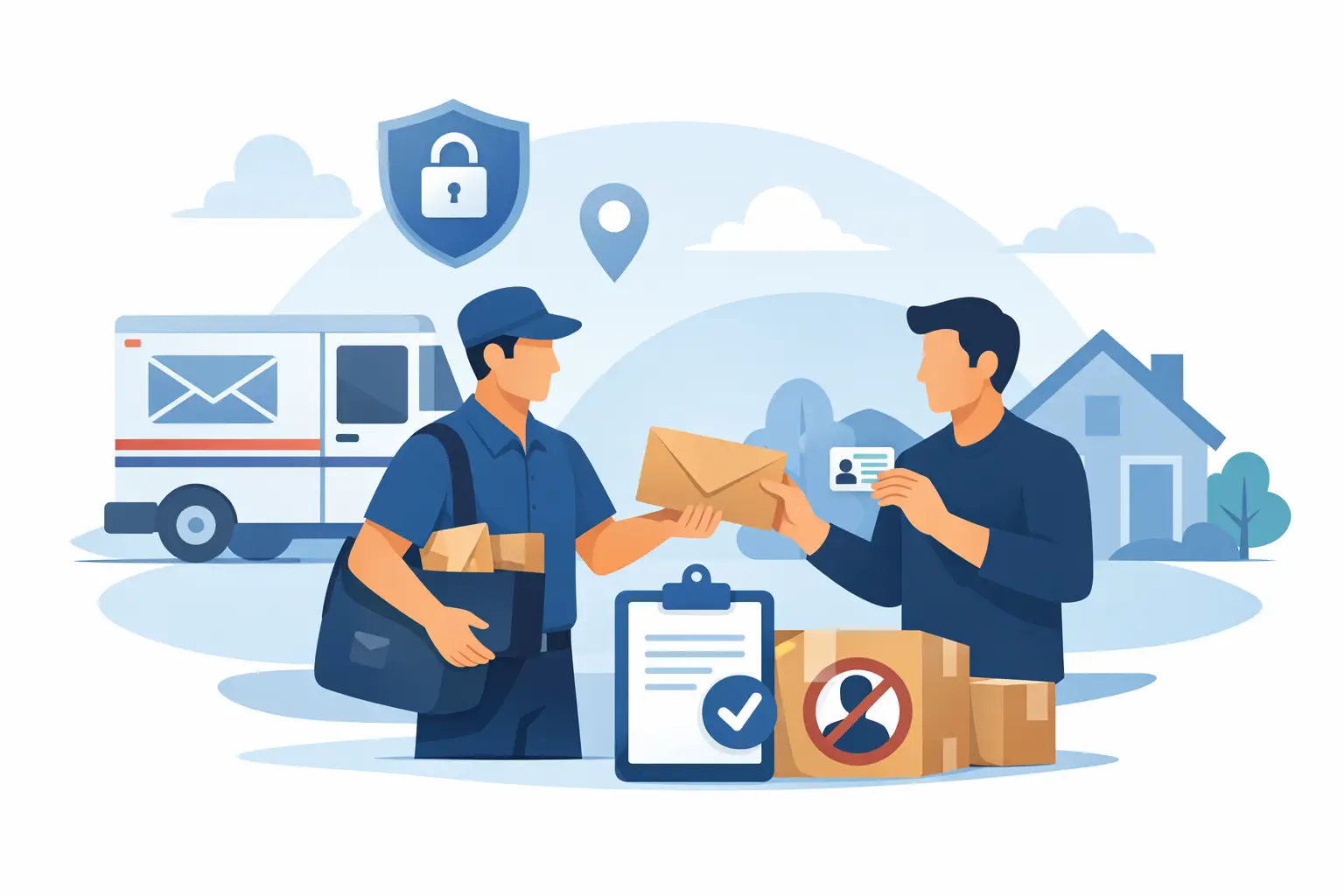
In practical terms, this means the postal carrier is not supposed to hand the mailpiece to a receptionist, family member, mailroom clerk, or other person unless that person is specifically authorized under USPS rules to act for the addressee. The service is designed to protect against casual acceptance by someone who happens to be present.
For organizations that depend on defensible mailing records, that distinction matters. There is a meaningful operational difference between proving a letter was mailed and proving it was delivered only to a specific intended recipient.
Who Can Sign for Restricted Delivery Mail
This is where many businesses need the most clarity. Restricted Delivery does not simply mean "no one but the named person ever." In USPS practice, the intended recipient can sign, and an authorized agent may be allowed to sign if USPS recognizes that authorization.
For an individual recipient, that usually means the addressee or a person formally authorized to receive the addressee's mail. For a business recipient, the rules can be more nuanced because companies often receive mail through mailrooms, registered agents, or designated personnel. If the piece is addressed to a person at a business, you should not assume any employee can sign for it. The point of the service is to limit acceptance.
That said, Restricted Delivery is not a guarantee that the named human being personally signed in every case. It is a USPS delivery-control service governed by postal procedures, and those procedures allow for authorized agency in some circumstances. If your legal or regulatory requirement depends on personal service to a specific individual, you should confirm whether Certified Mail with Restricted Delivery is sufficient for that purpose.
How It Works with Certified Mail and Return Receipt
Organizations often combine several USPS services without fully separating what each one proves. Certified Mail provides the mailing receipt and USPS tracking record. Restricted Delivery limits who can accept the item. Return Receipt provides evidence of the signature or delivery record, depending on the option used.
Those services work together, but they do different jobs. If you use Certified Mail without Restricted Delivery, you can still show that USPS accepted the mail and delivered it, but you may not be controlling who signed. If you add Restricted Delivery, you are adding recipient control. If you also add Return Receipt, you are improving your documentation of the delivery outcome.
For compliance mail, that layered approach is often the point. The stronger the record requirement, the more each service option needs to be selected deliberately rather than by habit.
When Restricted Delivery Makes Sense
Restricted Delivery is most useful when the identity of the receiving party matters almost as much as the fact of delivery. Law firms may use it for certain legal notices. Property management companies may use it when sending sensitive tenant communications. Financial services, insurance, government offices, and collections operations may use it where chain-of-custody concerns are higher than usual.
It can also make sense when prior mail handling has been inconsistent. If you have had disputes involving front-desk acceptance, internal routing delays, or signatures from people with no obvious connection to the intended recipient, Restricted Delivery may help reduce those challenges.
Still, it is not necessary for every Certified Mail piece. Many formal notices only require proof that the item was mailed and delivered to the address of record. In those cases, adding Restricted Delivery may increase cost and handling complexity without adding meaningful compliance value.
What is USPS Certified Mail Restricted Delivery Best Used For?
The best use case for what is USPS Certified Mail Restricted Delivery is mail that needs tighter recipient control but does not require full personal service by a process server. It sits in a practical middle ground. It is more controlled than standard Certified Mail, but it is not a substitute for every legal service requirement.
That trade-off is important. Restricted Delivery can strengthen your mailing record, but it may also slow successful delivery if the intended recipient is unavailable or if authorized acceptance is unclear. For deadline-driven organizations, that can affect timing.
This is why mail policy should be tied to the purpose of the document. If the notice only needs documented mailing and tracked delivery, standard Certified Mail may be enough. If the notice could be challenged because the wrong person accepted it, Restricted Delivery deserves a closer look.
Operational Limits and Common Misunderstandings
One common misunderstanding is that Restricted Delivery prevents all disputes. It does not. It improves control, but it does not eliminate questions about authorization, business mail handling, refusal, or delivery attempts.
Another misunderstanding is that it guarantees faster or more reliable delivery. In reality, the opposite can happen. Because acceptance is limited, delivery may require additional attempts or pickup by the recipient. That can be appropriate for [sensitive mail](https://www.sendcertifiedmail.com/news/usps-certified-mail-delivery-time), but it should be planned for.
There is also the issue of address quality. Restricted Delivery does not fix bad recipient data. If the name, delivery point, or business addressing format is wrong, the added service will not solve the underlying mailing problem. Strong compliance mail starts with accurate recipient records, clear document controls, and a process for selecting the right USPS options.
Cost Versus Compliance Value
Restricted Delivery adds cost on top of Certified Mail and any Return Receipt service selected. For low-volume mailers, that may be a case-by-case decision. For high-volume regulated mailers, the better question is whether the extra cost is justified by the specific risk being managed.
If a disputed delivery could trigger a legal challenge, regulatory issue, delayed action, or repeated notice cycle, the additional fee may be minor compared with the cost of administrative rework or exposure. On the other hand, using Restricted Delivery on routine mail that does not need that level of control can inflate mailing expense without strengthening your position.
This is where a documented mail policy helps. Instead of leaving service selection to ad hoc judgment, organizations can define which notice types require Certified Mail only, which require Return Receipt, and which warrant Restricted Delivery.
What Compliance Teams Should Document Internally
If your organization uses Restricted Delivery, document the reason for using it and retain the mailing records as part of the notice file. That includes the mail class and extra services selected, the date of mailing, USPS tracking data, delivery status, and any Return Receipt or signature evidence received.
For teams managing recurring compliance mail, consistency matters as much as the USPS service itself. A defensible process is built from repeatable steps: generate the notice, validate the address, apply the correct mailing option, capture proof, and retain the records. Platforms such as Send Certified Mail are often used to support that workflow by centralizing submission, tracking, and long-term record retention.
How to Decide Whether to Use It
Start with the legal or operational purpose of the notice. Ask whether you need proof of mailing, proof of delivery, control over who accepts delivery, or all three. Then consider timing. If a restricted handoff could delay receipt, determine whether that delay is acceptable.
Also look at the recipient type. Deliveries to individuals, businesses, and institutions can behave differently in practice. A service that adds protection in one scenario may add friction in another. The right choice depends on the notice requirement, the likelihood of dispute, and the cost of a weak delivery record.
For organizations that send formal notices regularly, the most practical approach is not to treat Restricted Delivery as a default or an afterthought. Use it when recipient control is part of the compliance objective. If it is not, standard Certified Mail with the right documentation may be the cleaner operational choice.
When the mailpiece matters, the service selection matters too. Restricted Delivery is less about adding postage options and more about deciding how much control your record needs before the letter ever leaves the building.