
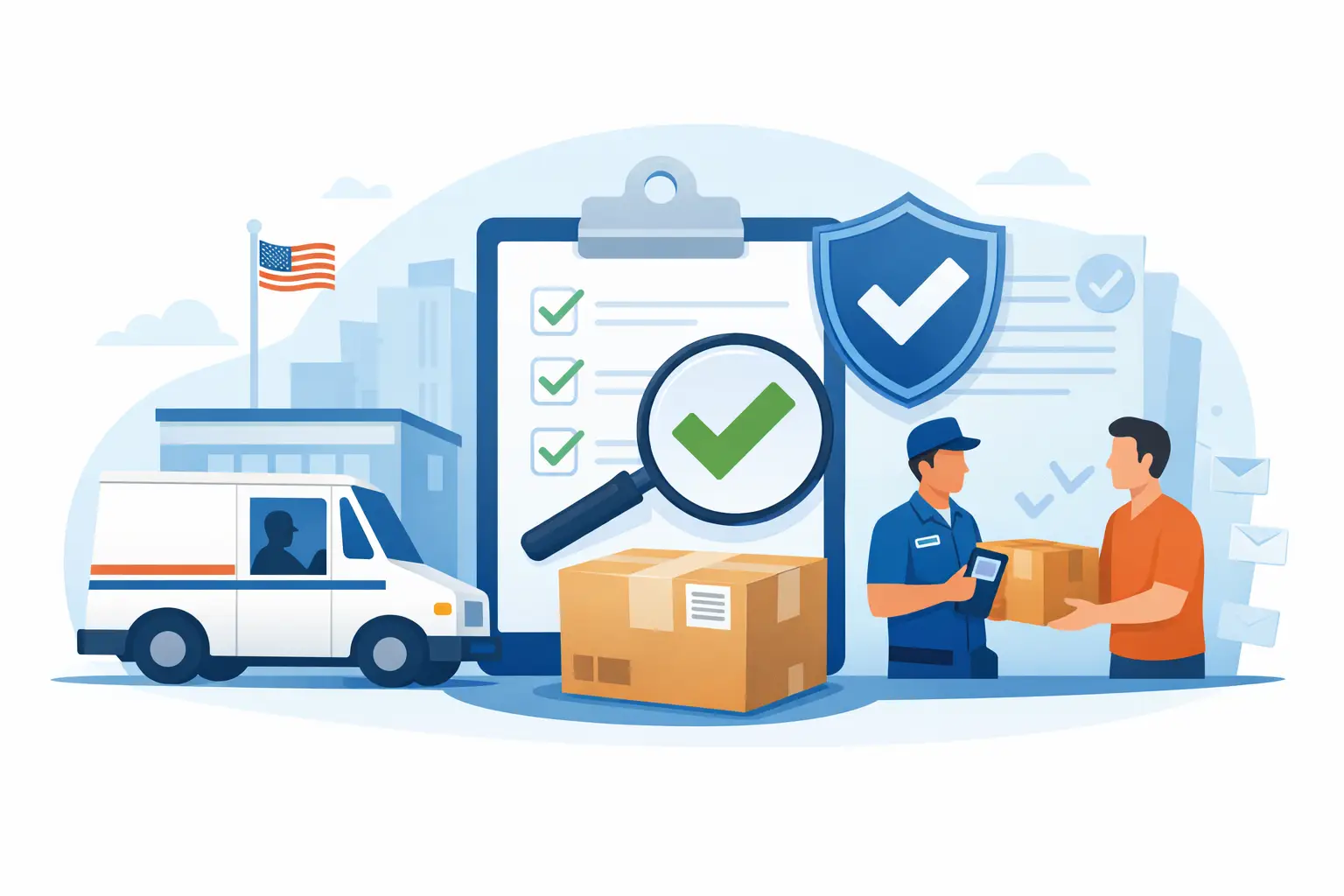
 When a notice deadline is challenged, the question is rarely whether you intended to mail it. The question is whether you can prove the USPS accepted it on time. That is where USPS acceptance proof becomes operationally critical for law firms, property managers, collectors, utilities, and any organization sending formal business mail that may later face scrutiny.
For routine correspondence, a postage transaction may be enough. For regulated notices, legal demands, foreclosure communications, tax letters, or other deadline-driven mail, it usually is not. You need documentation that shows the mailing entered the USPS stream, when that happened, and how that proof connects to the specific item or batch you sent.
What USPS acceptance proof actually means
USPS acceptance proof is documentation that the Postal Service received a mailpiece or mailing for processing. In practical terms, it helps establish that your letter was not just prepared internally, but physically accepted by USPS. That distinction matters whenever mailing date is tied to compliance, notice periods, dispute defense, or internal audit review.
Acceptance proof is often confused with delivery proof. They are not the same record, and they answer different questions. Acceptance addresses whether USPS took custody of the item. Delivery confirmation addresses whether the item reached its destination, and sometimes who signed for it if a Return Receipt service was used.
For many compliance workflows, acceptance is the first critical milestone. If a statute, lease, policy, or procedure requires that notice be mailed by a certain date, your records need to support that event clearly. If your process only shows that a label was created or that staff intended to mail something, you may still have a documentation gap.
Why USPS acceptance proof matters in compliance workflows
In regulated mailing environments, documentation is only useful if it is defensible. A spreadsheet maintained by staff may help operationally, but it does not carry the same weight as USPS-linked records. The stronger your proof of mailing, the easier it is to respond when a recipient claims a notice was never sent or was sent late.
This comes up often in eviction notices, debt collection letters, lien communications, insurance notices, code enforcement mail, and recall or account notices. The risk is not always a courtroom dispute. Often it is an audit, a customer complaint, a state regulator inquiry, or an internal review that asks for a clean chain of evidence.
Acceptance proof also reduces ambiguity across teams. Legal, compliance, operations, and customer service may all need to reference the same mailing file. If one group has batch notes, another has scanned receipts, and another has carrier tracking numbers with no central tie-back to the original document, the process becomes harder to defend. Good acceptance records solve a records-management problem as much as a postal one.
What acceptance proof should include
Not every mailing record is equally useful. The best acceptance documentation ties the mailing event to the specific item sent, the acceptance date, and the USPS tracking or mailing reference associated with that item.
In practice, strong records usually include the recipient name and address, the mailing class or service used, the USPS acceptance event, the date of acceptance, and the tracking history if tracking applies. If the mailing supports a compliance deadline, organizations should also retain the source document or file submitted for mailing so the proof of acceptance is tied to the exact notice that went out.
This is where manual processes often break down. Staff may print a notice, meter postage, and drop it at the post office, but fail to preserve a reliable connection between the letter, the recipient list, the acceptance evidence, and the final delivery trail. Over time, paper receipts get lost, handwritten logs become incomplete, and retrieving records for a notice sent months earlier becomes difficult.
Common misunderstandings about USPS proof
One common mistake is assuming a postage statement or internal print log is enough. It may show that a document was generated, but not that USPS accepted it. Another is treating delivery scans as a substitute for acceptance. Delivery data helps later, but if there is no clean acceptance record, you may still have a weak point in your chain of documentation.
There is also a difference between mailing classes and service options. Certified Mail, for example, provides a USPS mailing receipt and tracking path that can support stronger evidence than ordinary stamped mail. But even then, your organization still needs a process for retaining that evidence in a retrievable format. Proof that exists only on a paper stub in one employee's desk is not much help during an audit.
Certificate of Mailing services can also play a role, particularly when the main requirement is proof that an item was mailed rather than proof that it was delivered. Whether that is sufficient depends on the regulation, contract, or business rule involved. Some workflows require delivery confirmation. Others require only timely mailing. The right standard depends on the purpose of the notice.
The process problem behind missing acceptance proof
Most organizations do not lose mailing evidence because they ignore compliance. They lose it because the workflow is fragmented. Documents are created in one system, addresses are managed in another, mail is prepared manually, and acceptance records are stored somewhere else, if they are stored at all.
This creates failure points at every step. A notice may be printed but not mailed the same day. A tracking number may be assigned but not attached to the case file. A USPS receipt may be scanned but saved under the wrong client or batch. When deadlines and volume increase, these small process gaps become material risk.
That is why acceptance proof should be treated as part of a controlled mailing workflow, not as an after-the-fact document collection exercise. The strongest process is one where the document submission, mailing event, USPS acceptance, tracking updates, and record retention all stay connected from the start.
How to make USPS acceptance proof easier to manage
Organizations that send compliance-sensitive mail regularly usually benefit from standardization more than heroic staff effort. A repeatable workflow creates better evidence than asking employees to remember every postal step for every letter.
A controlled process generally starts with digital document submission and structured recipient data. From there, each mailpiece should be produced, mailed, and logged in a way that preserves USPS acceptance details automatically. The operational goal is simple: if someone asks six months later whether a notice was mailed on time, your team should be able to answer with records, not reconstruction.
For some mailers, that means centralizing all formal notices through a print-and-mail platform instead of relying on individual office staff or local post office trips. That approach can reduce manual handling while improving consistency in proof capture, tracking visibility, and long-term storage. Send Certified Mail is built around that exact need, especially for organizations that require same-business-day mailing, USPS acceptance records, tracking reports, and retained proof for future audits.
The trade-off is that not every organization needs the same level of process control. A small office sending occasional notices may manage with a simpler system if staff are disciplined and volumes are low. But once mailings become frequent, legally significant, or distributed across teams, manual methods become harder to trust.
What to ask when evaluating your current mailing proof
A useful internal test is whether your team can quickly produce five connected records for any past notice: the actual document mailed, the recipient details, the mailing date, the USPS acceptance proof, and any subsequent tracking or delivery record. If one of those pieces is missing or difficult to retrieve, your process likely needs attention.
You should also ask whether your current method depends on specific employees. If a key staff member is out, leaves the company, or stores records in a personal folder, continuity becomes a problem. Compliance mail should be process-based, not person-dependent.
Retention matters too. Some disputes surface long after the notice was sent. If your mailing evidence disappears after a short period, the value of having it in the first place drops sharply. Long-term, searchable record retention is often just as important as same-day proof capture.
Acceptance proof is only useful if you can produce it
The real value of USPS acceptance proof is not that it exists somewhere. The value is that it can be produced quickly, clearly, and in a format your legal, compliance, or operations team can rely on. That is what turns a postal event into business evidence.
For organizations that handle formal notices, this is less about mailroom efficiency and more about defensibility. If your proof of acceptance is consistent, organized, and tied to the underlying notice, you reduce uncertainty at the exact moment uncertainty becomes expensive.
A practical mailing process should leave you with fewer questions, not more. If your current workflow makes acceptance proof hard to capture or harder to retrieve, that is usually the signal to tighten the process before the next deadline puts it to the test.