
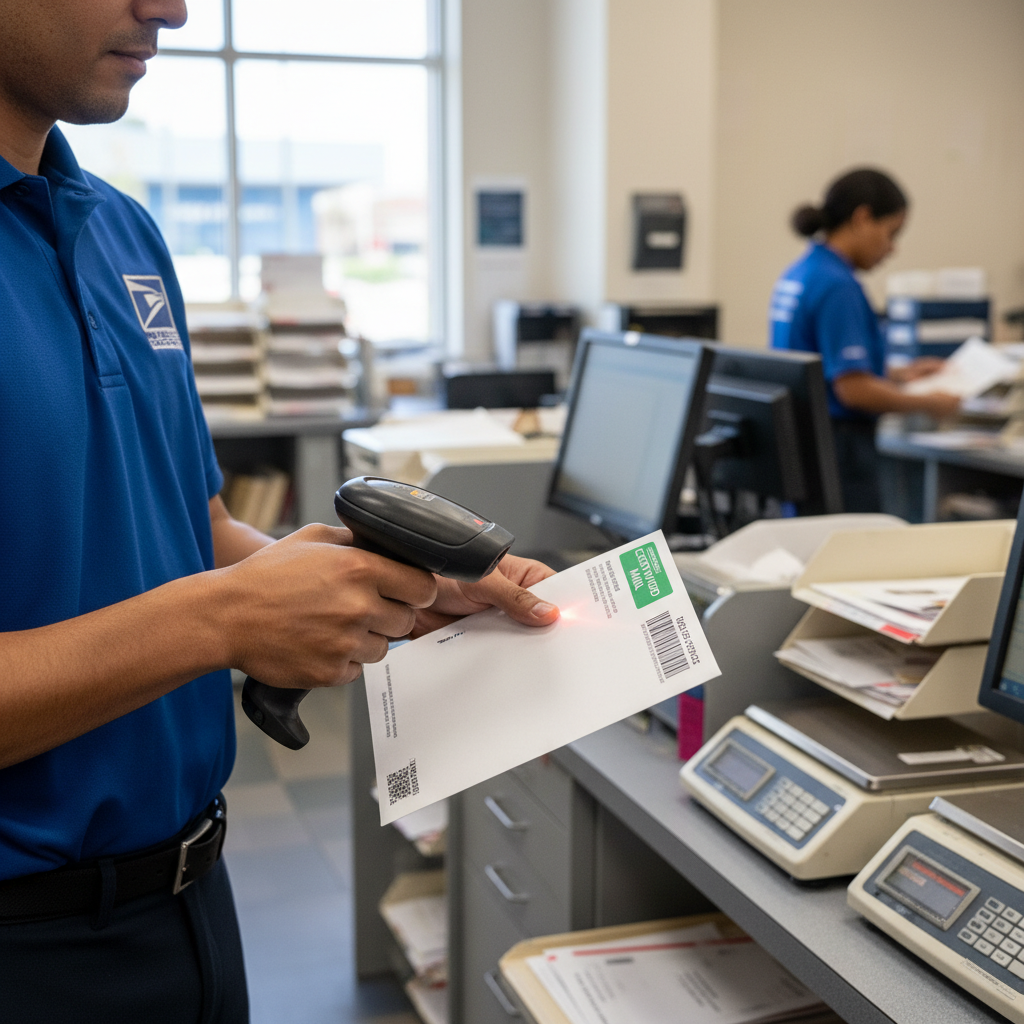
 Why Acceptance Scans and Proof of Mailing Matter More Than Ever
For years, many businesses believed one thing: If a letter had a USPS postmark, it proved when the mail was sent. But that is changing.
A newer USPS rule, USPS DMM §608.11 “Postmarks and Postal Possession,” now makes an important distinction. A postmark may show when mail was processed by the United States Postal Service, but not necessarily when the Postal Service first accepted the mail piece.
That difference is becoming important for businesses that send:
- USPS Certified Mail
- Legal notices
- Tax documents
- Compliance mail
- Tenant notices
- Financial disclosures
- Regulatory communications
Today, many organizations are focusing more on:
- Proof of mailing
- Acceptance Scans
- USPS Certified Mail receipts
- SCAN Forms
- Electronic Return Receipt records
- Delivery confirmation reports
For important mail, businesses want stronger proof showing when USPS took possession of the mail.
What Changed with USPS DMM §608.11?
USPS DMM §608.11 explains that a postmark does not always prove when USPS first accepted a mail piece.
A postmark may only show when the mail was processed through USPS equipment or facilities. That processing could happen later than the actual acceptance date.
In layman's terms:
- USPS may receive the mail first
- Processing may happen later
- The postmark date may be different from the acceptance date
Because of this, the Postal Service now says customers who need proof of mailing should use separate acceptance evidence.
Examples include:
- USPS Certified Mail receipts
- Certificate of Mailing forms
- SCAN Forms
- Requesting a manual counter postmark at the retail counter
This rule is becoming more important for businesses that rely on mailing deadlines and compliance records.
Why This Matters for Compliance Mail
For regular letters, this may not seem like a big issue. But for compliance mail, the mailing date can matter a lot. Businesses often send time-sensitive documents involving:
- Court deadlines
- IRS filings
- Collections letters
- Legal notices
- Tenant notifications
- Healthcare communications
- Financial documents
In these situations, organizations may need proof showing:
- The date of mailing
- When USPS accepted the letter
- When delivery happened
- Whether the recipient signed for the mail
That is why many businesses now rely on Acceptance Scans and proof of mailing instead of depending only on a postmark.
Postmark vs Acceptance Scan
Many people think these are the same thing. They are not.
USPS Postmark
A USPS postmark usually shows when mail moved through USPS processing equipment.
It may not show:
- When USPS first received the mail
- When the mail entered USPS possession
- The exact acceptance time
Mail can sit before processing happens. Because of this, the postmark date may not always match the actual acceptance date.
USPS Acceptance Scan
An Acceptance Scan shows when USPS officially accepted the mail piece into the mail stream.
This scan creates a record showing:
- USPS possession
- Date of mailing
- Time of acceptance
- Tracking activation
For compliance mail, Acceptance Scans often provide stronger proof of mailing than a postmark alone.
What Is a USPS SCAN Form?
A USPS SCAN Form is a Shipment Confirmation Acceptance Notice. It allows multiple mail pieces to be connected to one barcode.
Instead of scanning each letter individually, USPS scans one master barcode that represents the entire shipment.
This is especially useful for:
- High-volume USPS Certified Mail
- Batch mailing
- Compliance mail
- Business mail operations
When USPS scans the SCAN Form, the shipment receives an official Acceptance Scan.
Many businesses use SCAN Forms to help document USPS possession and improve mailing records.
Other Types of Proof of Mailing
Businesses often use multiple types of mailing records together.
USPS Certified Mail Receipt
A USPS Certified Mail receipt provides:
- A tracking number
- Acceptance information
- Proof of mailing
This is one of the most common forms of mailing documentation.
Certificate of Mailing
A Certificate of Mailing is a USPS service that provides evidence that a mail piece was accepted by the Postal Service on a specific date. Unlike USPS Certified Mail, a Certificate of Mailing does not include a tracking number, delivery confirmation, or proof of delivery. Instead, it serves as basic proof that the sender presented the mail piece to USPS for mailing.
Businesses sometimes use a Certificate of Mailing for routine compliance communications, customer notifications, billing statements, or other documents where proof of mailing is needed, but full USPS tracking is not required. Some organizations also use it as supplemental documentation alongside Certified Mail workflows to help support internal record keeping and mailing timelines.
Because it does not include tracking or recipient signature records, a Certificate of Mailing is generally considered less comprehensive than USPS Certified Mail for legal notices, sensitive documents, or high-risk compliance mail.
Manual Counter Postmark
Some businesses use requesting a manual counter postmark at the retail counter inside the Post Office.
This may help provide additional mailing evidence, because a postal employee manually applies the postmark during acceptance.
Electronic Return Receipt
An Electronic Return Receipt provides digital proof of delivery and recipient signature information for USPS Certified Mail. Instead of waiting for a physical green card to arrive back in the mail, users can access delivery records and recipient signature details online through their account.
Many businesses now prefer Electronic Return Receipt service, because it helps improve organization and reduces paper handling. Digital records are easier to retrieve, store, search, and share when needed for legal documentation, compliance reviews, customer disputes, or operational reporting.
Electronic Return Receipt service is especially valuable for organizations sending high volumes of Certified Mail, because it helps centralize proof of delivery records while reducing the risk of lost or damaged green cards.
Why Businesses Want Better Mailing Records
More businesses now want digital records instead of paper files.
Traditional mailing systems often rely on:
- Paper receipts
- Green card records
- Filing cabinets
- Manual USPS tracking searches
These systems can become difficult to manage over time.
Modern businesses want:
- Digital proof of mailing
- Online delivery confirmation
- Centralized tracking
- Searchable records
- Long-term storage
This is especially important during:
- Audits
- Legal disputes
- Tax reviews
- Compliance investigations
Organizations increasingly need faster access to mailing records and proof of delivery documentation.
Restricted Delivery and Registered Mail
Some businesses also use extra USPS services for sensitive mail.
Restricted Delivery
Restricted Delivery limits who can sign for the mail piece. Only the named recipient or authorized person may accept delivery.
This service is often used for:
- Legal documents
- Sensitive records
- Compliance communications
Registered Mail
Registered Mail is one of the most secure USPS services available. It includes chain-of-custody handling and additional security during transportation.
Businesses may use Registered Mail for high-value or highly sensitive items.
How Send Certified Mail Helps
Send Certified Mail helps businesses send and track USPS Certified Mail online while improving proof of mailing and compliance documentation.
Users can:
- Upload documents online
- Send Certified Mail without trips to the mailroom and Post Office
- Same-business-day mailings
- Access USPS tracking in real time
- Retrieve proof of delivery
- Access Electronic Return Receipt records
- Store mailing records securely for up to 10 years
- Manage compliance mail from one dashboard
The platform helps organizations streamline legal notices, financial mail, tenant communications, and other important mail workflows.
Get Started Today
USPS DMM §608.11 is changing how businesses think about postmarks and proof of mailing.

A postmark alone may no longer provide the strongest evidence showing when USPS accepted possession of a mail piece.
 Because of this, businesses are paying closer attention to:
- Acceptance Scans
- USPS Certified Mail receipts
- SCAN Forms
- Electronic Return Receipt records
- Delivery confirmation documentation
For organizations that depend on compliance mail, better mailing records can help improve organization, reduce risk, and create stronger documentation for the future.
Frequently Asked Questions
Does a USPS postmark prove when USPS accepted the mail?
Not always. A postmark may reflect processing time, not the actual acceptance time.
What provides stronger proof of mailing?
Acceptance Scans, USPS Certified Mail receipts, and SCAN Forms often provide stronger mailing evidence.
Can I still use a green card?
Yes. Businesses can still use the traditional green card, though many now prefer Electronic Return Receipt service.
How long are mailing records stored with Send Certified Mail?
Mailing reports and tracking records are available online for up to 10 years.