
 From Upload to Delivery: Understanding Your Complete Send Certified Mail Mailing Record
Sending an important letter is only the beginning. For legal, compliance, financial, property management, government, and other business correspondence, organizations may need to answer questions long after a letter leaves the office:
When was the letter submitted? When was it printed? When was it mailed? Did USPS accept it? Was it delivered? Who signed for it? And can we still retrieve the documentation?
Send Certified Mail was built around this need for documented mailing records.
Our mailing process captures timestamps and status information throughout the life of a letter. Customers also receive email notifications when important production and mailing events occur. USPS tracking, delivery records, Electronic Return Receipts, archived documents, and available Affidavits of Mailing can then help create a more complete record surrounding the mailing.
The result is more than a postage label or tracking number.
It is a documented mailing history that connects the letter you sent with the records showing how it was processed and mailed.
Why Mailing Timestamps Matter
A Certified Mail label contains important information, but creating a label does not mean a letter has been printed or accepted by USPS.
That distinction can become important when a mailing is connected to a legal deadline, compliance requirement, customer dispute, audit, or internal review.
Send Certified Mail records key events as a letter moves through production and mailing.
Depending on the mailing and service selected, the record can help answer questions such as:
- When was the mailing submitted?
- When was the letter processed for production?
- When was it printed?
- When was it mailed?
- When did USPS accept the mailpiece?
- What happened while it traveled through the USPS network?
- When was delivery attempted or completed?
- Is signature evidence available?
These timestamps have long been part of Send Certified Mail's reporting and customer notification process. They create a chronology that can be particularly useful when someone reviewing a mailing was not the person who originally sent it.
The Mailing Record Starts Before USPS Tracking
USPS tracking is an important part of a Certified Mail record, but it does not tell the entire story. There is activity before a letter reaches USPS.
The document must be submitted, processed, printed, prepared, and presented for mailing. Send Certified Mail captures production information so customers have visibility into this part of the mailing lifecycle as well.
Customers receive email notifications as their letters reach important milestones, including when a letter has been printed and when it has been mailed. That distinction helps establish a clearer timeline.
|
Mailing Record |
What It Helps Document |
|
Submitted/production record |
When the mailing entered the Send Certified Mail workflow |
|
Print timestamp |
When the document was printed |
|
Mailing notification |
When the completed letter was mailed |
|
USPS Acceptance Scan |
USPS acceptance of the Certified Mail piece |
|
USPS tracking history |
Movement and delivery events reported by USPS |
|
Electronic Return Receipt |
Available delivery and signature evidence |
|
Affidavit of Mailing |
Additional documentation concerning the mailing |
|
Archived letter |
The document associated with the mailing record |
|
Online reporting |
A centralized history for later retrieval |
Together, these records provide context that a tracking number alone cannot.
The USPS Acceptance Scan Is a Critical Timestamp
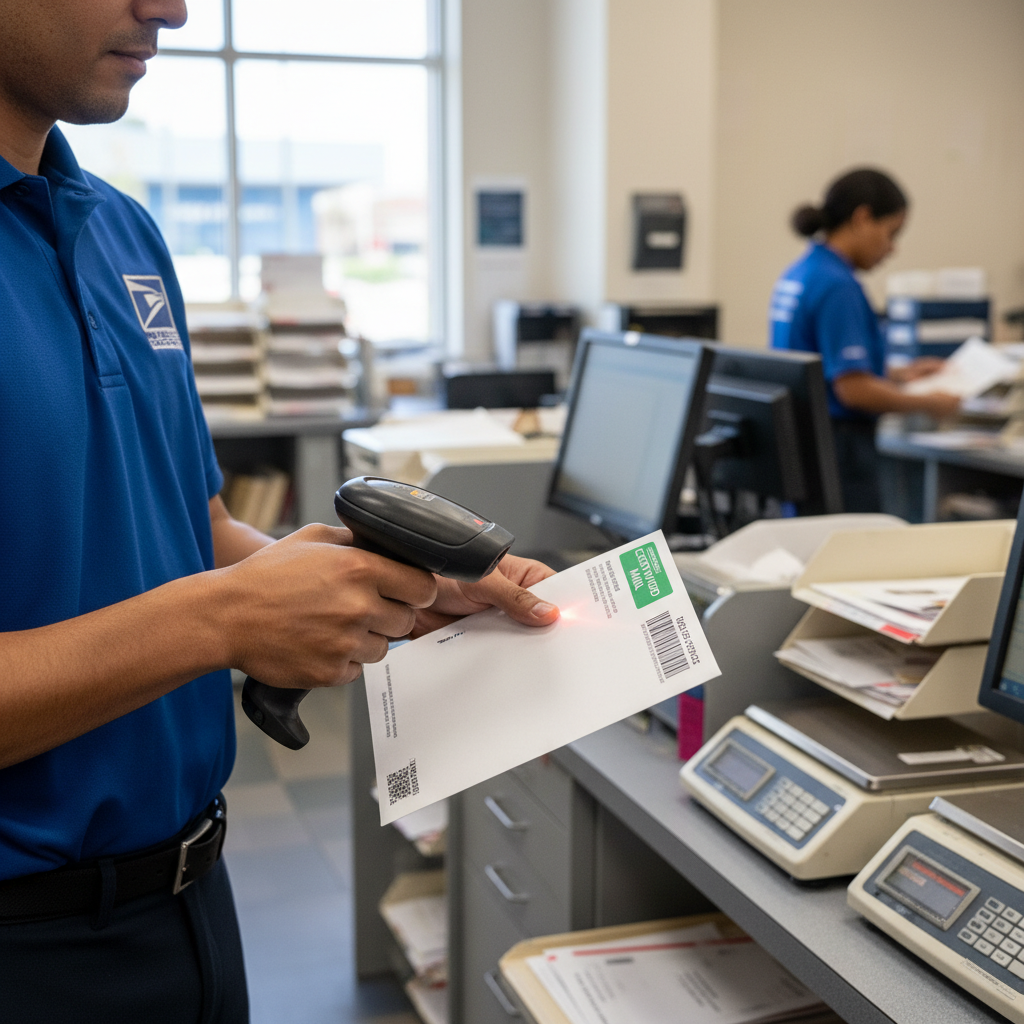
One timestamp deserves particular attention: the first USPS Acceptance Scan. Purchasing postage or generating a Certified Mail tracking number does not establish that USPS actually received the letter.
The first USPS Acceptance Scan documents the point at which USPS records the Certified Mail piece as accepted into its network. That can make the Acceptance Scan particularly valuable for time-sensitive correspondence.
Send Certified Mail handles the physical mailing process and obtains USPS Acceptance Scan documentation for Certified Mail processed through our full-service workflow. Customers can then connect that USPS event with the production and mailing information already associated with the letter.
This creates a clearer progression:
- Letter submitted
- Letter printed
- Letter mailed
- USPS acceptance
- USPS tracking
- Delivery result
Rather than treating these as unrelated records, Send Certified Mail keeps the information associated with the mailing.
Email Notifications Create Immediate Visibility
Documentation is most useful when customers do not have to search for it. Send Certified Mail provides email notifications as important mailing events occur. For example, customers can be notified when their letter has been printed and when it has been mailed.
These notifications provide operational visibility while the mailing is underway. They can also be useful for teams in which the person monitoring a matter is different from the person who originally submitted the correspondence.
An attorney may need confirmation that a notice was mailed. A property manager may need to update a case file. A compliance department may need to verify that a mailing deadline was met.
The customer does not have to wait for final delivery to begin documenting the mailing history.
Proof of Mailing and Proof of Delivery Are Different
One of the most common sources of confusion surrounding important mail is the difference between proof of mailing and proof of delivery. They answer different questions.
Proof of mailing concerns whether and when an item entered the mailstream.
Proof of delivery concerns what happened at the destination.
A strong mailing record may need both.
USPS Certified Mail tracking can provide acceptance and subsequent tracking events. When Return Receipt service is selected, additional delivery and available signature information can become part of the record.
Neither should be confused with the underlying letter itself. That is why retaining the mailed document alongside its mailing and delivery evidence can be useful.
Electronic Return Receipt Adds Delivery Evidence
For correspondence where delivery documentation is important, customers can select an Electronic Return Receipt (ERR).
The Electronic Return Receipt provides available USPS delivery information electronically, including recipient signature information when captured by USPS.
This avoids relying solely on a traditional paper Return Receipt, commonly called the "green card."
Electronic records are easier to associate with an electronic matter or compliance file and can be retrieved without searching through physical filing cabinets.
For legal and compliance teams managing many mailings, that can make subsequent research significantly easier.
The Affidavit of Mailing Adds Another Layer to the Record
For many legal professionals, one of the most valuable documents is the Affidavit of Mailing.
An Affidavit of Mailing provides a formal record concerning the mailing of a document. Depending on the applicable legal or administrative matter, affidavits can be useful when an organization needs documentation beyond ordinary tracking information. This is especially relevant, because tracking and affidavits serve different purposes.
A USPS tracking record reports postal events associated with a mailpiece. An Affidavit of Mailing documents the mailing through a formal statement concerning the mailing event.
For attorneys and organizations maintaining compliance files, the affidavit can become part of a broader evidence package containing the actual letter, mailing information, USPS records, and delivery documentation.
Whether an affidavit is legally required or appropriate depends on the applicable law, court rule, contract, policy, and circumstances. Send Certified Mail does not determine whether an Affidavit of Mailing satisfies a particular legal requirement. That determination should be made by the responsible organization or its legal counsel.
What Is a Complete Mailing Evidence Package?
There is no universal evidence package required for every legal or compliance mailing. Different statutes and organizations require different records. However, when documentation matters, a well-organized mailing file may contain several complementary records.
1. The Actual Document
Retaining the final letter helps establish what correspondence was associated with the mailing.
2. Production History
Timestamps document when important production events occurred.
3. Mailing Confirmation
The mailing record documents when the prepared letter moved into the postal process.
4. USPS Acceptance
For Certified Mail, the first USPS Acceptance Scan provides a USPS-generated event documenting acceptance into the postal network.
5. USPS Tracking History
Tracking records show available events as the mail piece moves toward its destination, including attempted delivery, delivery, forwarding, return, or other USPS statuses.
6. Delivery Evidence
When applicable, Electronic Return Receipt adds available USPS delivery and signature information.
7. Affidavit of Mailing
Where selected and appropriate, an Affidavit of Mailing can add formal documentation concerning the mailing itself.
8. Long-Term Archive
The records remain useful only if they can be found when needed.
Send Certified Mail maintains available mailing records in its secure online archive for 10 years.
Why Connecting the Records Matters
Imagine a legal department being asked about a notice three years after it was sent. Having a tracking number is helpful.
But the reviewer may also need to know which version of the document was sent, when it was produced, when it was mailed, when USPS accepted it, what happened during delivery, and whether additional proof was retained.
If those records are stored in separate systems, employee inboxes, filing cabinets, and USPS screenshots, reconstructing the mailing can take considerable time.
A centralized mailing history makes the record easier to understand.
This is especially valuable for organizations managing large volumes of notices, including:
- Law firms
- Property management companies
- Government agencies
- Tax professionals
- Financial institutions
- Healthcare organizations
- Insurance companies
- Collection departments
- HOAs and community associations
- Corporate legal and compliance departments
The value is not just having more data. It is being able to connect the data to the correct letter.
One Letter, One Documented History
Send Certified Mail's full-service process is designed to keep the major components of a mailing connected.
Organizations can upload completed correspondence online. Send Certified Mail handles printing, packing, postage, and USPS mailing.
For eligible Certified Mail, the resulting record can include production timestamps, mailing confirmation, the USPS Acceptance Scan, tracking history, Electronic Return Receipt when selected, and available supporting reports and documentation.
For organizations sending higher volumes, batch processing and secure SFTP automation can extend the same approach across recurring mailings.
This allows a compliance team to focus less on manually assembling mailing evidence and more on maintaining an organized record of its communications.
Mailing Documentation Does Not Create Legal Compliance
There is an important distinction. No mailing report, tracking number, timestamp, Return Receipt, or affidavit can determine whether a letter itself satisfies a legal requirement.
Organizations remain responsible for determining:
- whether a notice is required;
- what the notice must say;
- who must receive it;
- which delivery method is permitted or required;
- when it must be mailed or delivered;
- whether additional attempts are necessary; and
- how long the records must legally be retained.
Send Certified Mail supports the production, mailing, USPS documentation, and recordkeeping side of that process. That distinction is particularly important for legal and compliance mail, where requirements can differ significantly by jurisdiction and type of notice.
Frequently Asked Questions About Mailing Timestamps and Documentation
Does creating a Certified Mail label prove that a letter was mailed?
No. Label creation and USPS acceptance are different events. A USPS Acceptance Scan provides a USPS-generated tracking event showing that the Certified Mail piece was accepted into the postal network.
Does Send Certified Mail show when my letter was printed?
Yes. Production reporting includes timestamps associated with important processing events, including when a letter is printed.
Will I know when my letter is mailed?
Send Certified Mail provides customer notifications for important mailing milestones, including when a letter is printed and when it is mailed.
What is the difference between a mailing timestamp and USPS tracking?
Production and mailing timestamps document activity within the Send Certified Mail workflow. USPS tracking records events generated by USPS after the mail piece enters the postal network. Together, they provide a more complete timeline.
What is an Affidavit of Mailing?
An Affidavit of Mailing is a formal statement documenting information concerning a mailing. It can become part of the supporting record for legal or compliance correspondence. Whether an affidavit is required or legally sufficient for a specific matter should be determined by qualified counsel.
Is an Affidavit of Mailing the same as a USPS Acceptance Scan?
No. They document different aspects of the mailing. The Acceptance Scan is a USPS tracking event. An Affidavit of Mailing is formal documentation concerning the mailing event.
Is an Electronic Return Receipt the same as proof of mailing?
No. An Electronic Return Receipt relates to delivery and available signature information. Proof of mailing concerns evidence that the mail piece was actually mailed or accepted into the postal network.
How long does Send Certified Mail retain mailing records?
Available mailing records and documentation are accessible through Send Certified Mail's online archive for up to 10 years. Organizations should establish their own legal retention requirements based on applicable law and policy.
A Mailing Record Should Answer More Than "Was It Delivered?"
For important correspondence, delivery is only one part of the story.
A useful mailing record can show when the letter entered production, when it was printed, when it was mailed, when USPS accepted it, what happened during delivery, and what supporting documentation remains available afterward.
Send Certified Mail has incorporated timestamps, customer notifications, USPS documentation, and long-term reporting into its mailing process for years because important mail often needs to be understood long after it is sent.
The objective is straightforward, keep the letter and the evidence surrounding its mailing connected.
For attorneys, compliance teams, government agencies, property managers, and other organizations sending important correspondence, that connected record can make the difference between knowing that a letter was sent and being able to clearly document its mailing history.
 Keep Your Mailing Records Connected
Important mail should leave behind a clear, accessible record. From production timestamps and USPS Acceptance Scans to tracking, Electronic Return Receipts, Affidavits of Mailing, and long-term document retention, Send Certified Mail helps organizations keep the evidence surrounding each mailing organized and easy to retrieve.

Want to see how the complete mailing and documentation process works? Schedule a complimentary, custom Live Demo with a member of our Customer Support Team today.